

Applications Ina Plastics makes propagation trays, the patented Double Tray System (DTS), pots and hydroponic troughs from recycled plastic in Greece. This page shows how growers use them for tobacco, tomato, leafy greens, watermelon, hemp, oregano and berries, with the tray sizes, cell volumes and practical steps that matter in the nursery and in the field.Seedling trays and growing systems, crop by crop
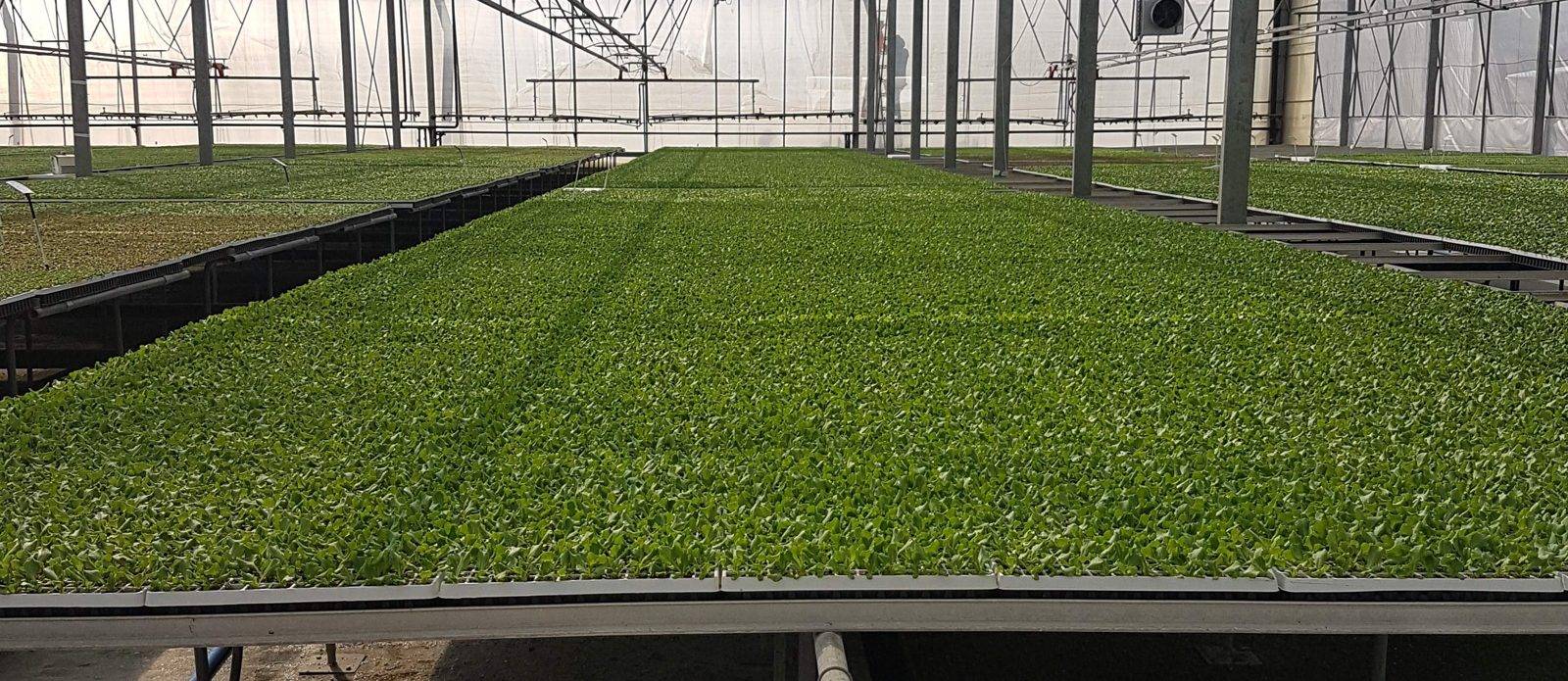
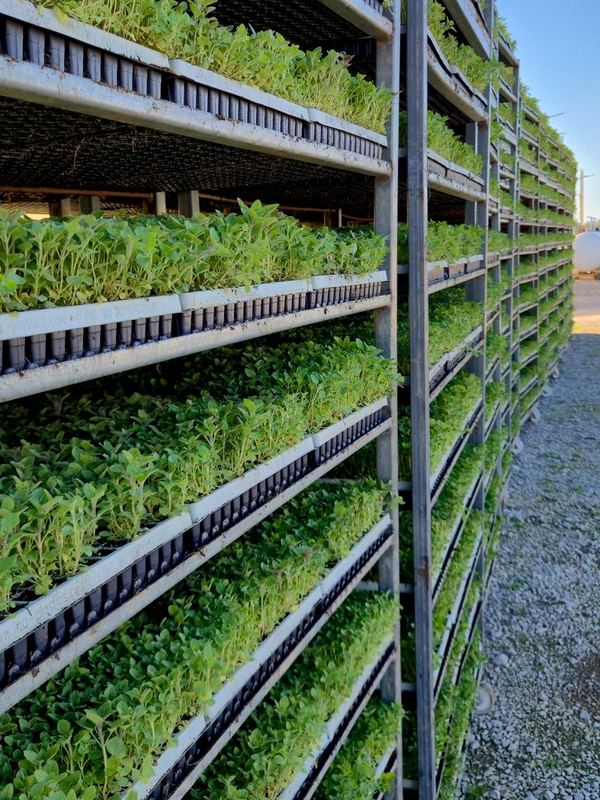
Young plants in the Double Tray System on rails. The same tray floats on water beds.
Application 01 · Grafting nurseries
Grafted tomato transplants
Many customers have used the DTS 72 (72 ml cells) successfully for grafted tomato propagation, for a dense, intact root plug. Customers report homogeneous development, a healthier root system and seedlings that adapt faster after planting.
- DTS 72 · 67×33 cm
- 45.5×45.5×72 mm cells
- 72 ml per cell
- DTS 45 also suggested for grafted tomato and melon
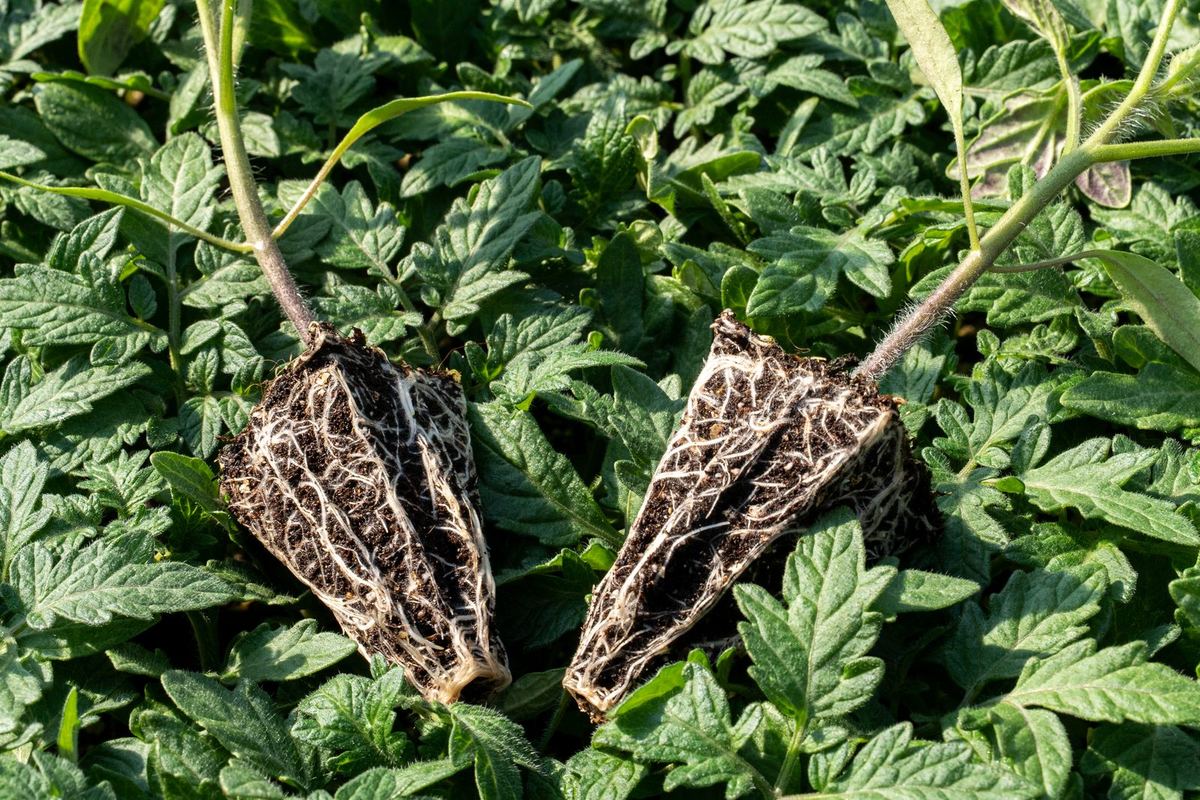
- The root plug keeps the shape of the cell.
- White roots fill the plug down to the bottom.
- A single, strong stem.
Why the cell matters for grafted plants
A grafted plant costs more than a seedling, so every plant that fails in transport or at planting is expensive. A larger, deeper cell gives the root system room to fill the plug completely, so the plant leaves the tray in one piece.
Practical tips
- Match the stems. Sow rootstock and scion so that their stem diameters match on grafting day. Rootstocks are often sown at a different time from the variety.
- Heal, then harden. Keep fresh grafts in a humid, dim healing chamber for about a week, then bring them back to normal light and humidity step by step.
- Plant high. Keep the graft union above the soil line, and remove any shoots that grow from the rootstock below it.
Tips 1–3 are general grafting practice from extension guides (NC State, University of Arizona, Cornell).
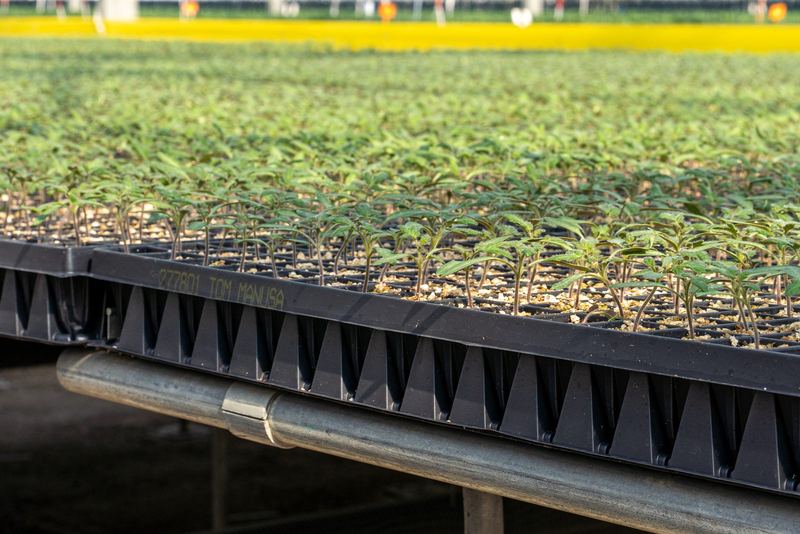
On the bench
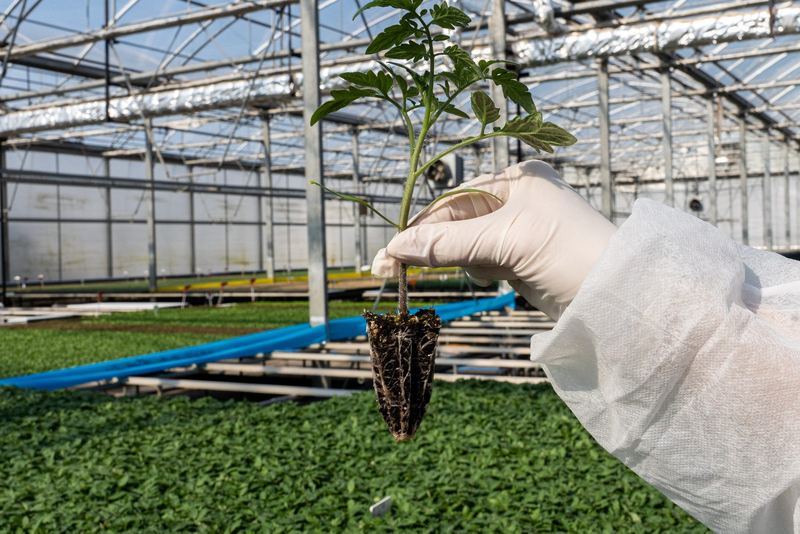
Ready to ship
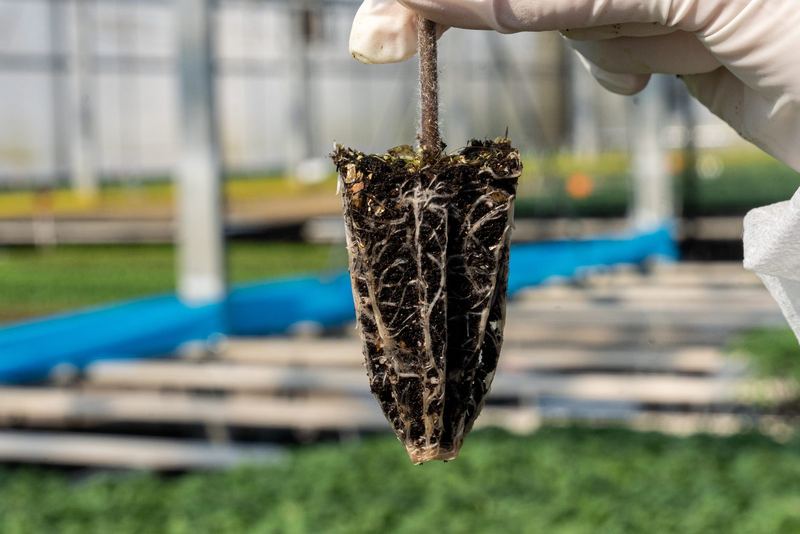
Intact root ball
Application 02 · Open-field tomato
Processing (industrial) tomato transplants
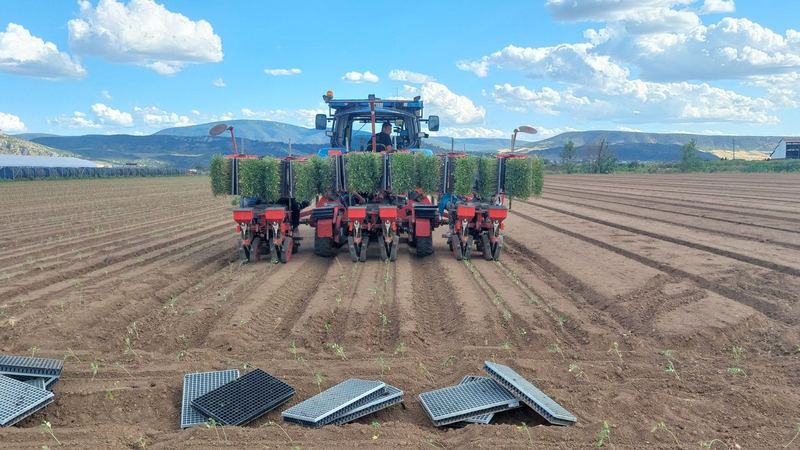
Processing tomatoes are raised in the DTS and planted by machine. The trays load straight onto the transplanter, and the plants stay in the cells even when the tray stands vertically.
- DTS 336 for processing tomato
- 20.4×20.4×53 mm cells
- 11.6 ml per cell
- Transplanter-ready
What the transplanter needs
Mechanical transplanters are set up for a plant of a given size. Seedlings that grow too tall catch in the machine, and older, overgrown transplants yield less. So the tray has to deliver even plants on the planting date, and every plug has to come out whole.
- Easy extraction, with no residues left in the seedling
- Homogeneous plants, so the machine plants every row evenly
- High survival rate and higher yields
Practical tips
- Count back from the field date. Sow so that plants are at the transplanter’s target height on planting day, not before.
- Keep plants compact. Dense trays stretch the stems. Gentle conditioning (brushing) and good spacing on the bench help keep them short.
- Load full trays. The DTS goes onto the transplanter as it is. The plants stay in the cells even when the tray stands vertically.
Tips 1–2 are general practice from Cornell and UC trials on processing tomato transplants.
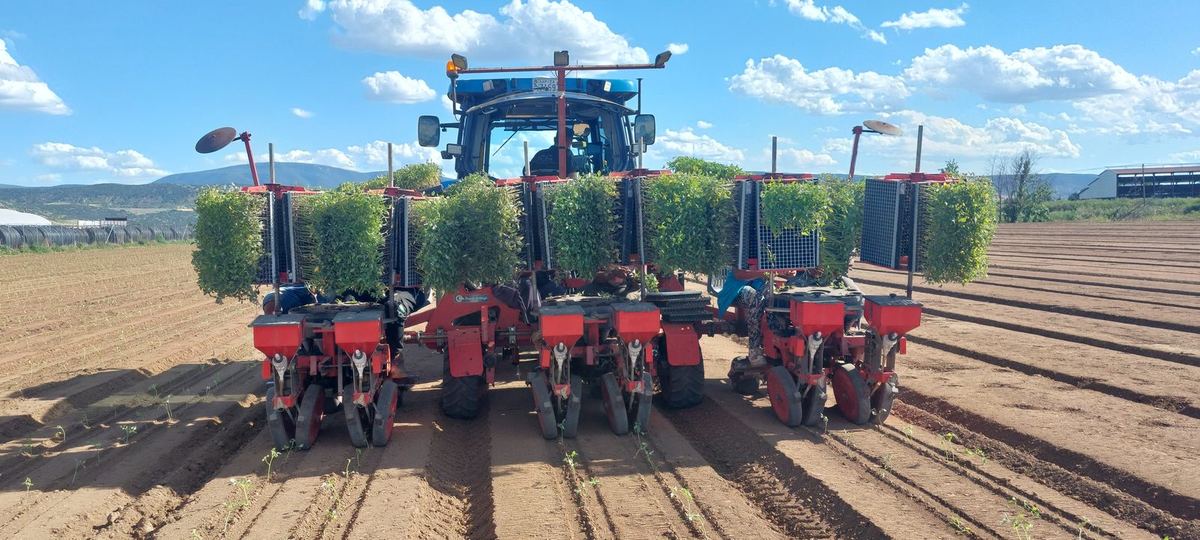
- DTS trays are loaded on the transplanter.
- The planting units set one plant at a time.
- The prepared beds are planted in one pass.
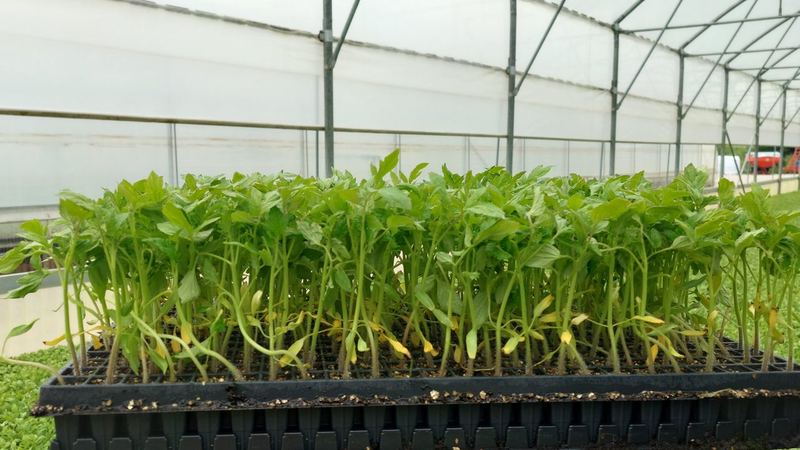
In the nursery
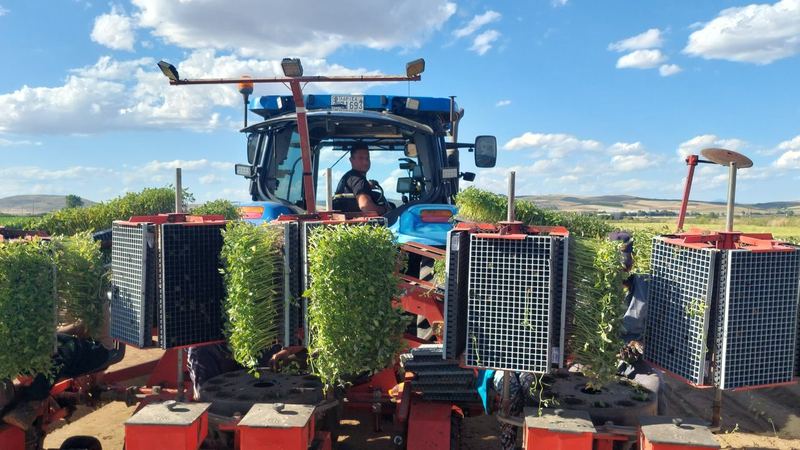
On the machine
In the field
Application 03 · Greenhouse hydroponics
Hydroponic tomato in cultivation troughs
Ina cultivation troughs and drainage gutters carry hydroponic tomato crops. They are made to order in any size from 100% recycled material with UV stabilisation, and can cut water use by up to 90% compared with conventional cultivation.
- Up to 90% less water
- Made to order, any size
- 100% recycled, UV-stabilised
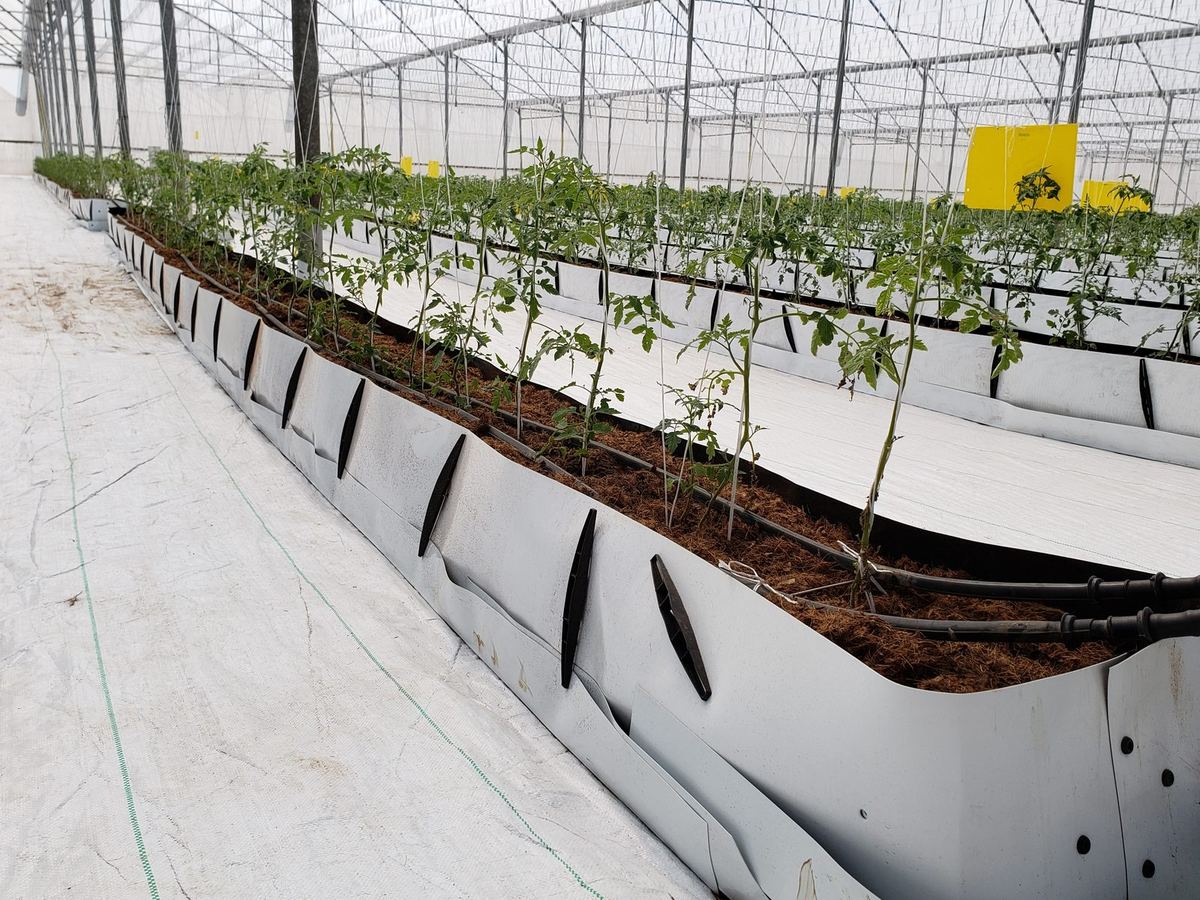
- The white trough keeps the root zone cooler.
- The substrate is a mix of coco and chips.
- Drip irrigation lines feed each row.
Project: Colima, Mexico
In our hydroponic tomato project in Colima, Mexico, the plants grow in a mix of coco and chips, and the troughs are white to keep the temperature cooler.
- No need for fertile ground, and it can be installed on any horizontal site
- More plants per square metre, so higher yields
- The root system is easily monitored and controlled
- The use of chemicals is reduced significantly
Practical tips
- Choose the colour for the climate. White reflects sunlight and keeps the root zone cooler in hot regions.
- Size the trough for the substrate. Troughs suit loose substrate such as coco. Gutters with spacers carry grow bags or pots.
- Collect the drainage. Drainage gutters collect the run-off, so it can be reused or discharged in a controlled way.
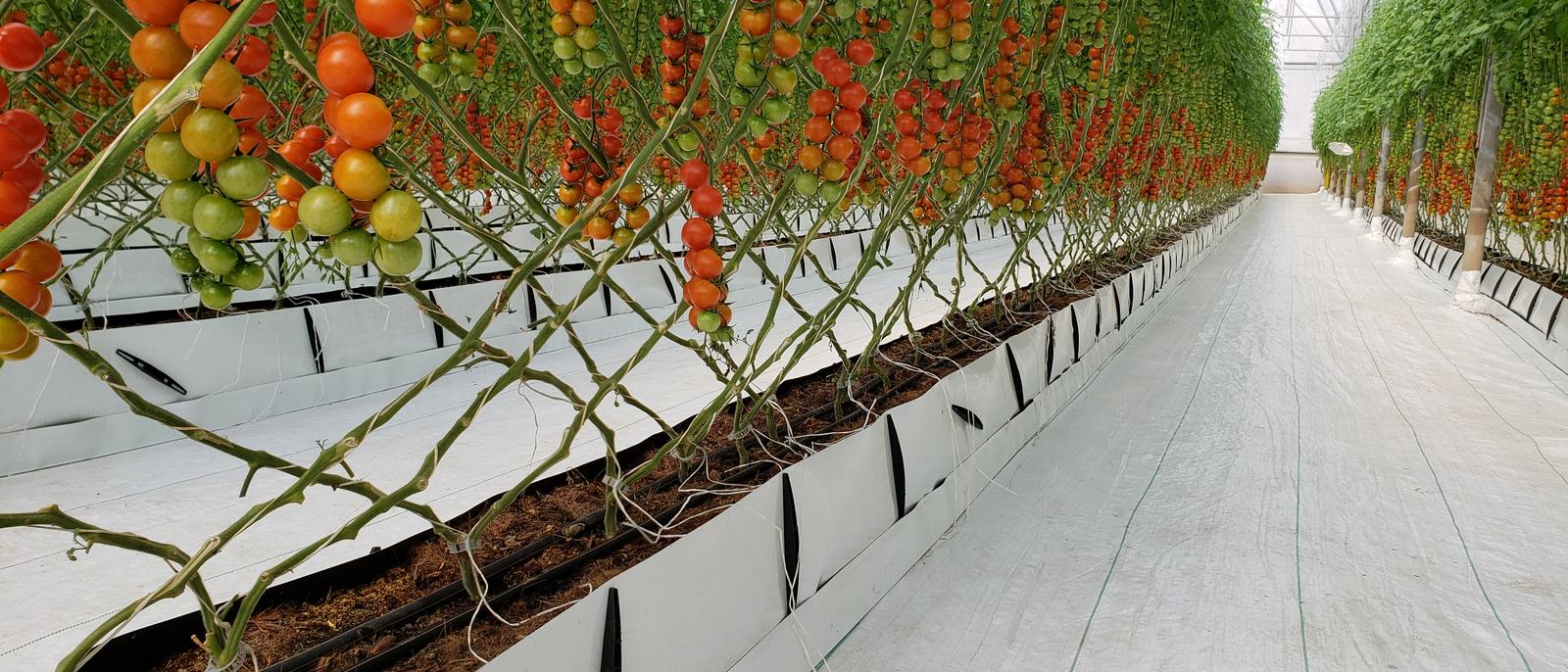
Ripe fruit in the same system
Application 04 · Vegetable transplant nurseries
Lettuce, cabbage, broccoli and cauliflower seedlings
Leafy and cruciferous vegetables are raised in the DTS on rails or floating water beds. The top tray holds the seedlings, the bottom tray supports them, and the plug comes out whole for a fast start in the field.
- 96% germination
- 12% faster growth
- +20% plants per m²
- DTS 330 for cabbage, lettuce, broccoli
The summer problem
Lettuce, broccoli, cauliflower and cabbage are shallow-rooted and very sensitive to swings in water. Summer transplants are prone to transplant shock, and lettuce bolts quickly under heat stress. A strong, well-formed root plug that holds moisture gives the plant its best chance from day one.
Practical tips
- Keep moisture steady. Irrigate consistently, especially in heatwaves. The DTS root plug holds moisture better.
- Sow early, do not crowd. To reduce bolting, sow early and avoid overcrowding.
- Match the cell to the season. Smaller cells (330, 12 ml) for fast spring crops. Larger cells (209 WR, 21.1 ml) for plants that must wait longer or face heat.
From “Summer tips for growers”, Ina Plastics news, .
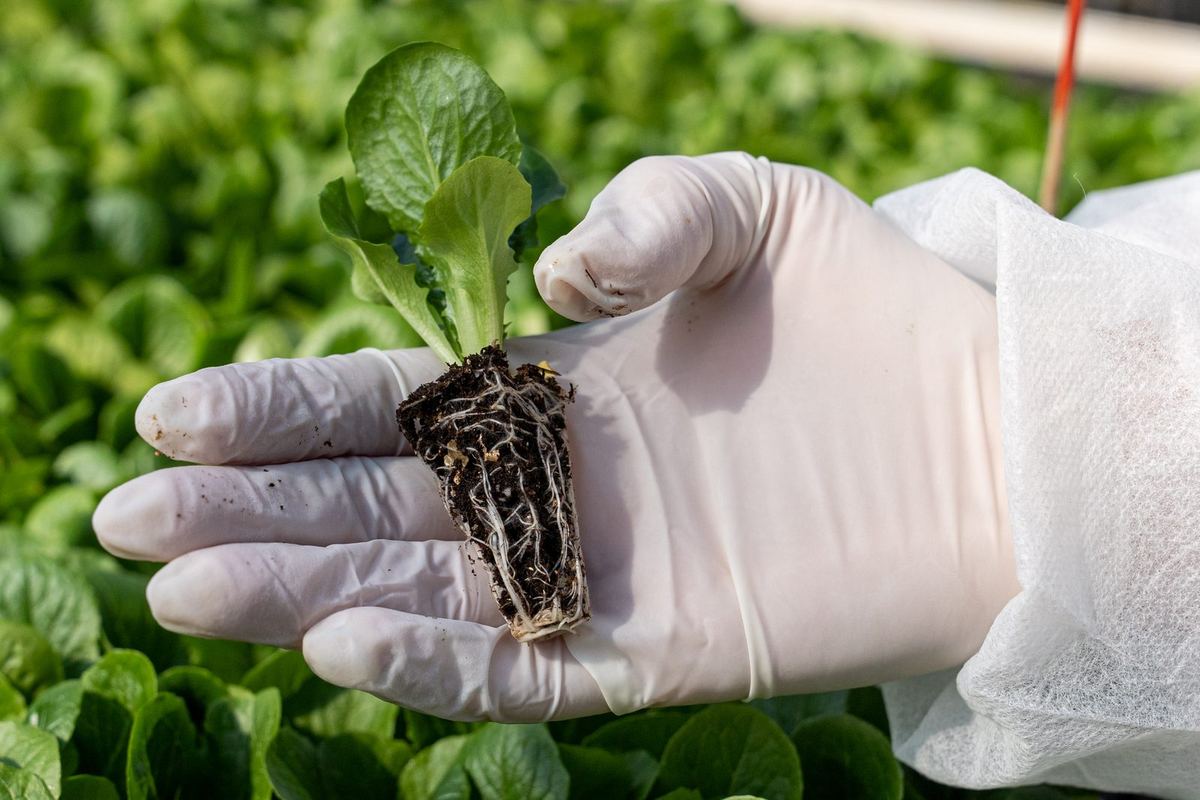
- The root plug holds together outside the cell.
- The leaves are compact and balanced.
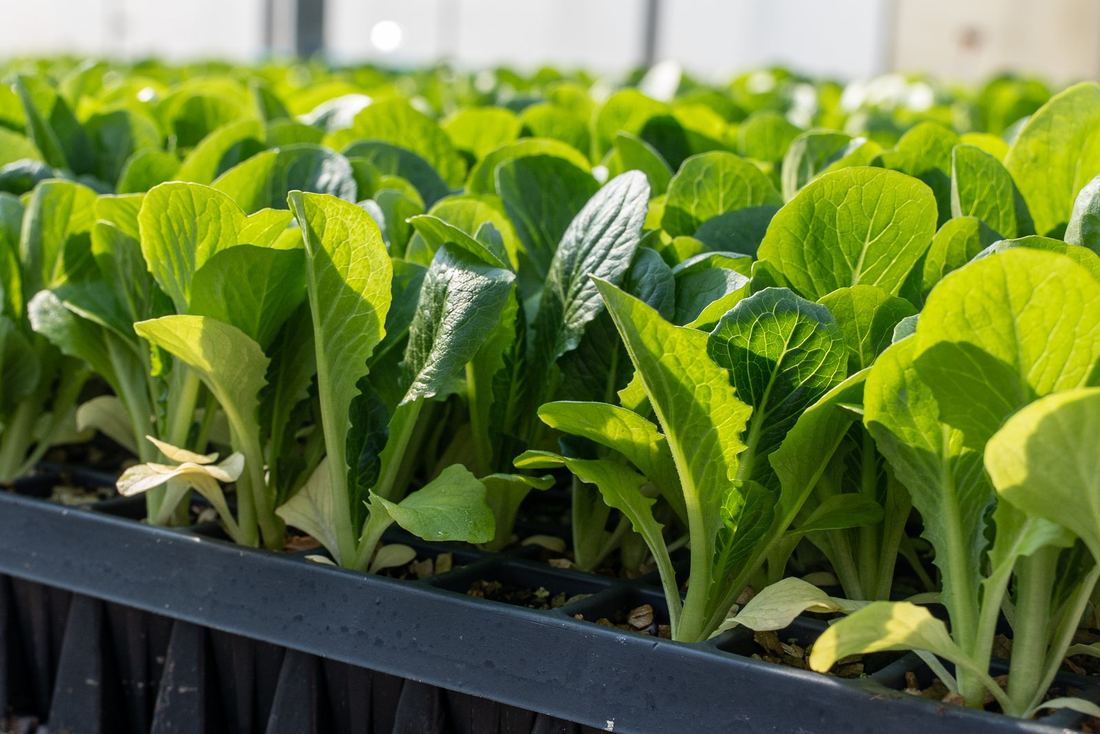
Even stand in the tray
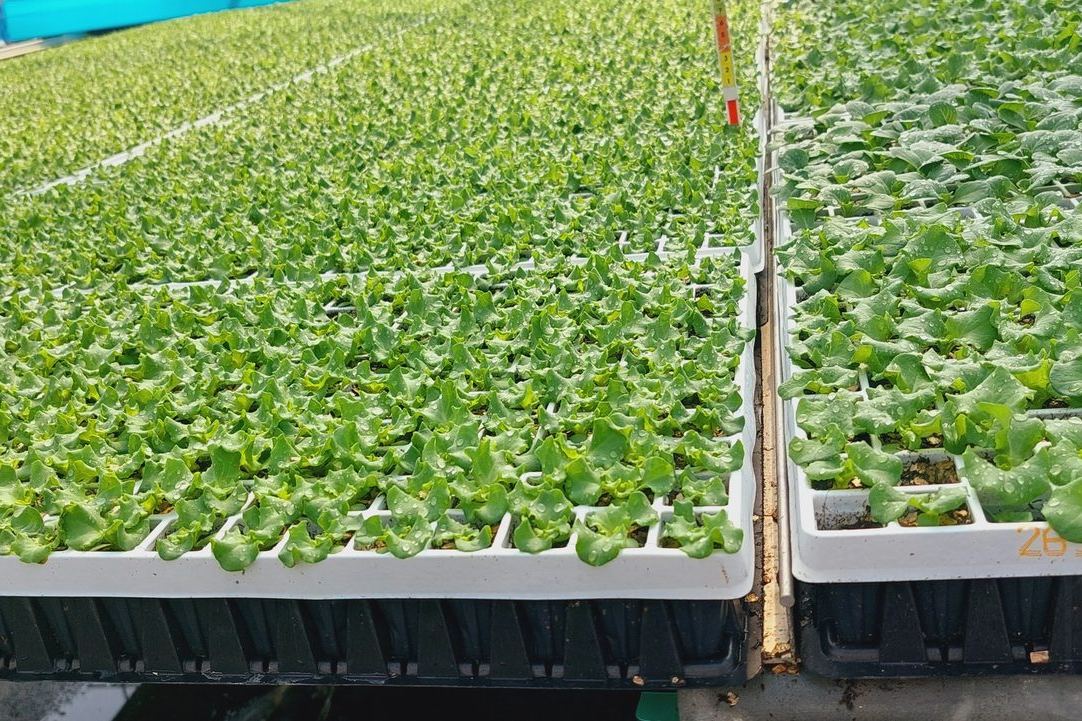
Nursery scale
| Tray | Size (cm) | Cells | Cell dimension (mm) | Cell volume (ml) |
|---|---|---|---|---|
| DTS 330 | 60×40 | 330 | 21×21×50 | 12 |
| DTS 300 | 67×33 | 300 | 23×23×50 | 15 |
| DTS 228 | 60×40 | 228 | 24×24×55 | 18 |
| DTS 209 WR | 52×32 | 209 | 22.8×22.8×55 | 21.1 |
| DTS 210 | 67×33 | 210 | 28×28×58 | 22 |
Application 05 · Cucurbits
Watermelon seedlings
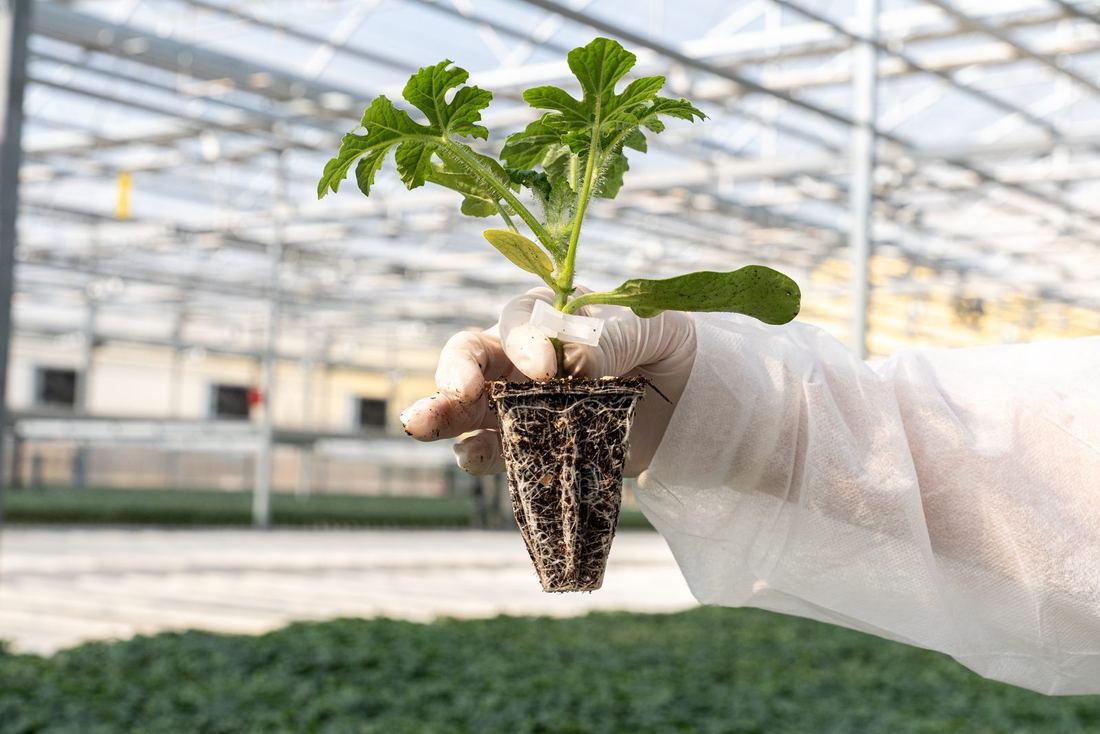
Watermelon seedlings are raised in the Double Tray System on rails or in float beds. For grafted cucurbits we suggest the larger DTS 45 cell, and the range lets you choose the cell size that suits your sowing.
- DTS 45 for grafted melons
- Rails or float beds
- Patent WO2014147250A1
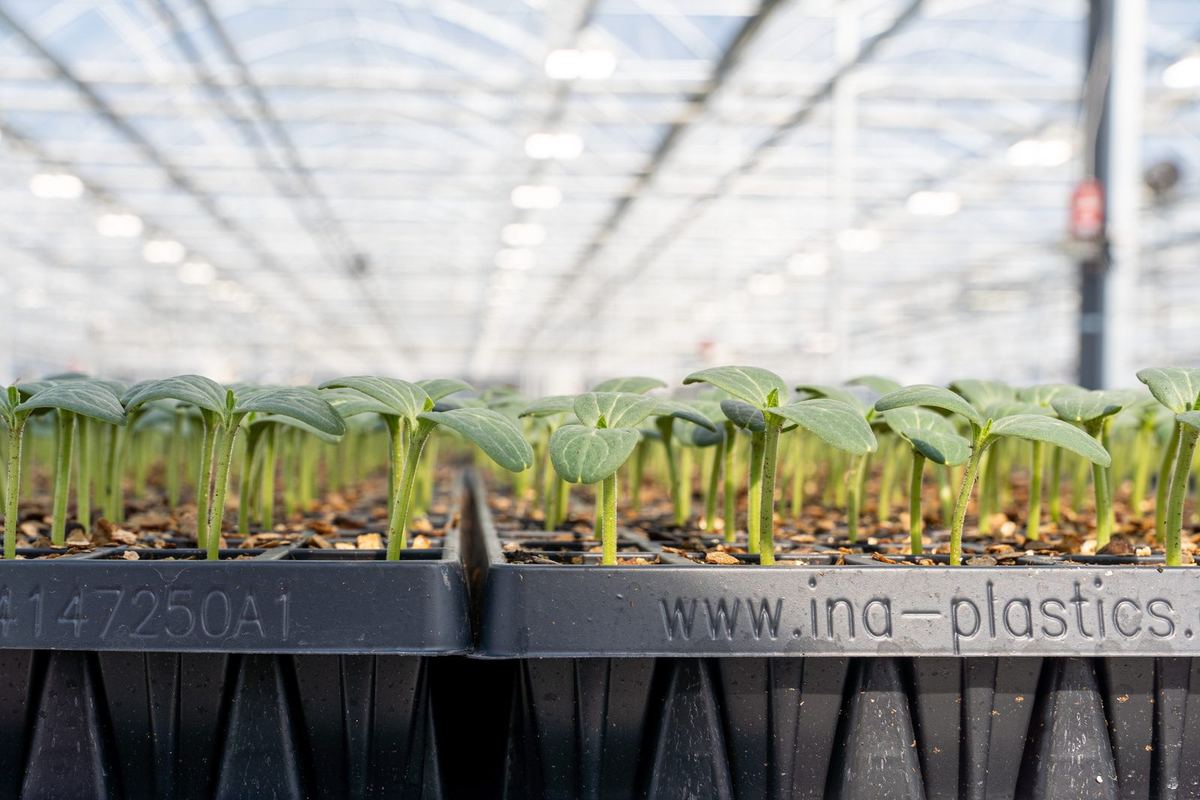
- World patent number WO2014147250A1 is moulded in the tray.
- The top tray holds the cells.
- The bottom tray carries and supports it.
- Seedlings reach the cotyledon stage evenly.
Grafted or own-root
Many watermelon growers plant grafted transplants, with the variety grafted onto squash or bottle gourd rootstock. Both parts have to be ready on the same day, so the nursery plans two sowings and needs trays that give even, predictable seedlings.
- High survival rate and a strong, healthy root system
- Easy extraction, with no residues left in the seedling
- Recyclable trays, a 100% ecological solution
Practical tips
- Stagger the sowings. Sow the rootstock and the variety at different times so that their stems match at grafting.
- Move up after grafting. Finish grafted plants in a larger cell, with rootstock and scion roots together in the same cell.
Tips are general practice for grafted cucurbits (UF/IFAS and grafting guides).
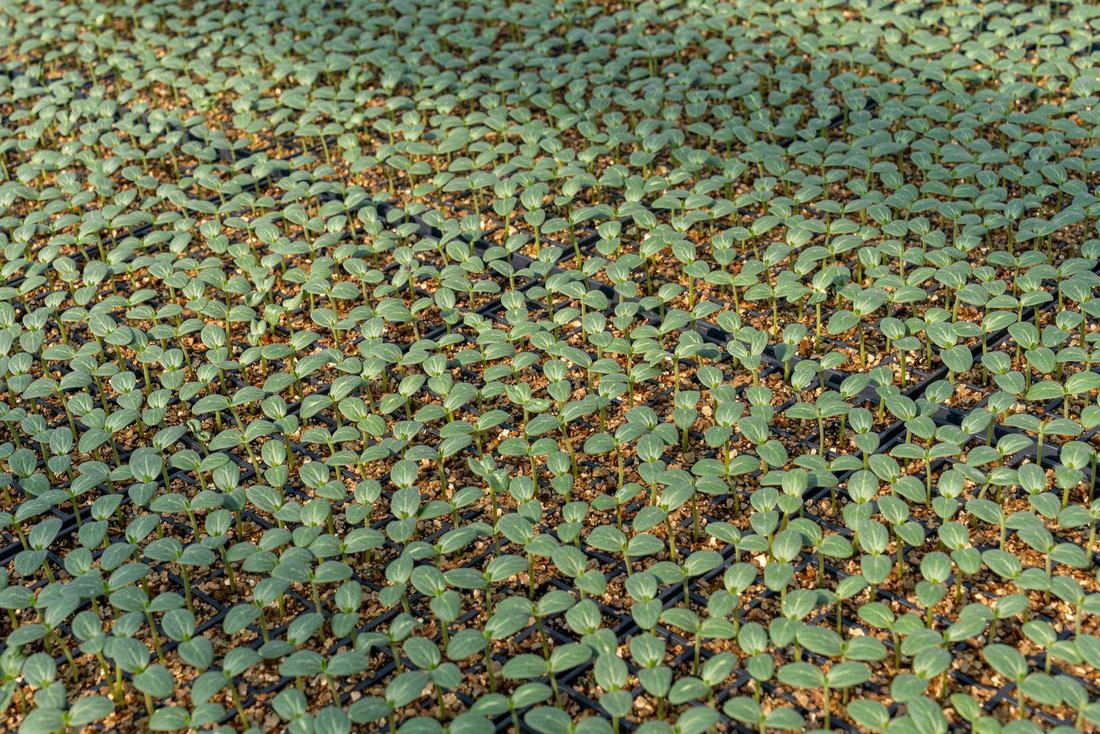
From above
Root plug
Application 06 · Automated plug production
Plugs and automated lines: the DTS 240 Plug-in Tray
The DTS 240 cells Plug-in Tray holds 240 foam or stone wool plugs on a 60×40 cm footprint. It is compatible with finger-picking robotic transplanters and automatic production lines, and it can cut tray cost by about 50% when you reuse the bottom tray.
- 240 cells
- 60×40 cm
- Cell 26×26×39 mm
- Plug ⌀22×25 mm
- About 50% lower cost
Built for plugs
It suits all available types of ⌀22×25 mm plugs, including Cultilene and Grodan stone wool and the new degradable foam plug Peatfoam. The cell design gives ideal air pruning. It brings all the benefits of the Double Tray System: economy, hygiene, productivity, plant quality and environmental protection.
A leading nursery in San Luis de la Paz, Guanajuato, Mexico, trialled the 240 Plug-in Tray with peat moss plugs and reached its conclusions quickly. The roots got ideal aeration and the seed germinated fast in the plug.
Ina Plastics news, “DTS 240 Cells for Plug Propagation”
Practical tips
- Reuse the base. Reuse the bottom tray for at least three or four years and replace only the top tray. That cuts cost by about 50%.
- Automate the assembly. For high volumes, Ina’s Automatic Assembly System, built with Provik automation, stacks and assembles top and bottom trays on a conveyor line.
- Close the loop. The tray is made of recycled material and is recyclable at the end of its life.
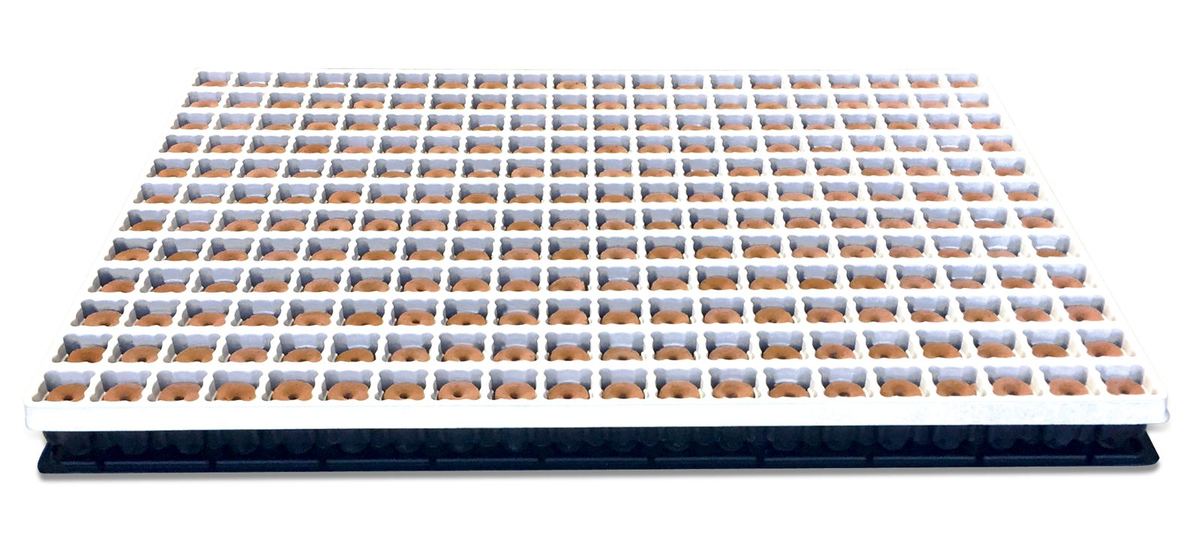
- One ⌀22×25 mm plug in each cell.
- The top tray has 240 cells.
- The bottom tray is reused for 3–4 years.
Application 07 · Tobacco
Tobacco transplants in float beds
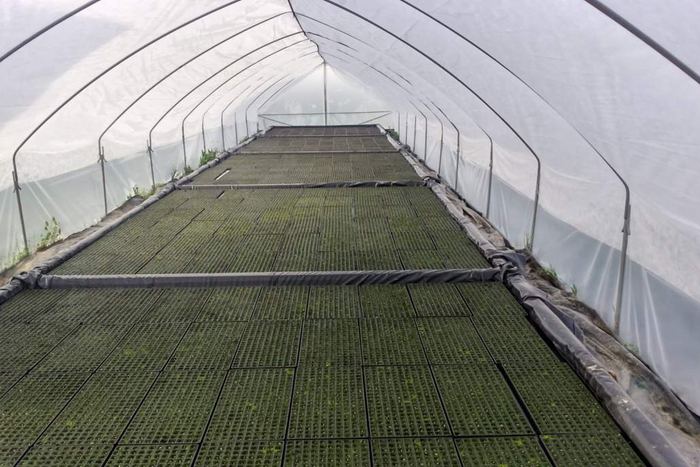
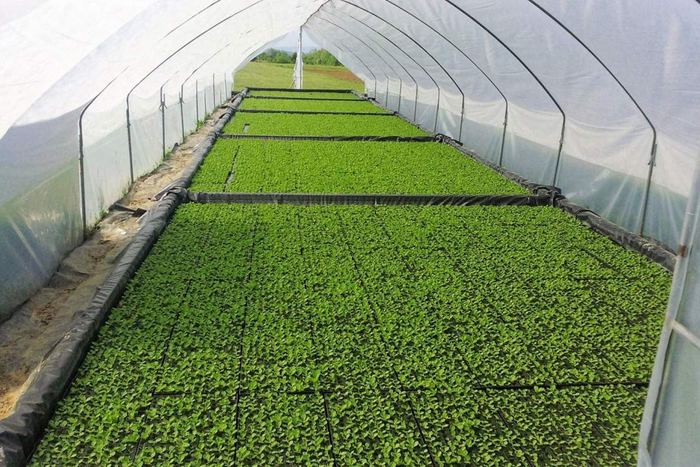
The floating Double Tray System replaces EPS float trays in tobacco transplant production. It floats on the water bed, keeps the roots undamaged, and is disinfected and reused for at least six sowing seasons.
- 67×33 and 52×32 cm trays
- 209–406 cells
- 10–22 ml per cell
- In commercial use since
The challenge
For more than 40 years, seedling propagation companies have relied on expanded polystyrene (EPS) trays. EPS is porous, so it is hard to disinfect between crops, and it is hard to recycle at the end of its life.
How the floating DTS helps
- Floats on the water at a level that encourages plant development
- Premature growth compared with the traditional tray, with homogeneous development
- Roots are not damaged, and the plants come out of the cells very easily
- Plants adapt faster in the field, and the yield per hectare increases
Practical tips
- Pick the cell for the plant you want. Fewer, larger cells (DTS 209 WR or DTS 210, 21–22 ml) give a bigger transplant. 300, 338 and 406 cells give more plants per bed.
- Keep the float bed clean. When you clip the seedlings, remove the clippings so that leaf debris does not build up in the trays and spread disease.
- Disinfect in batches. The glossy surface and small volume mean many trays can be dipped together. After the season, store them in the shade.
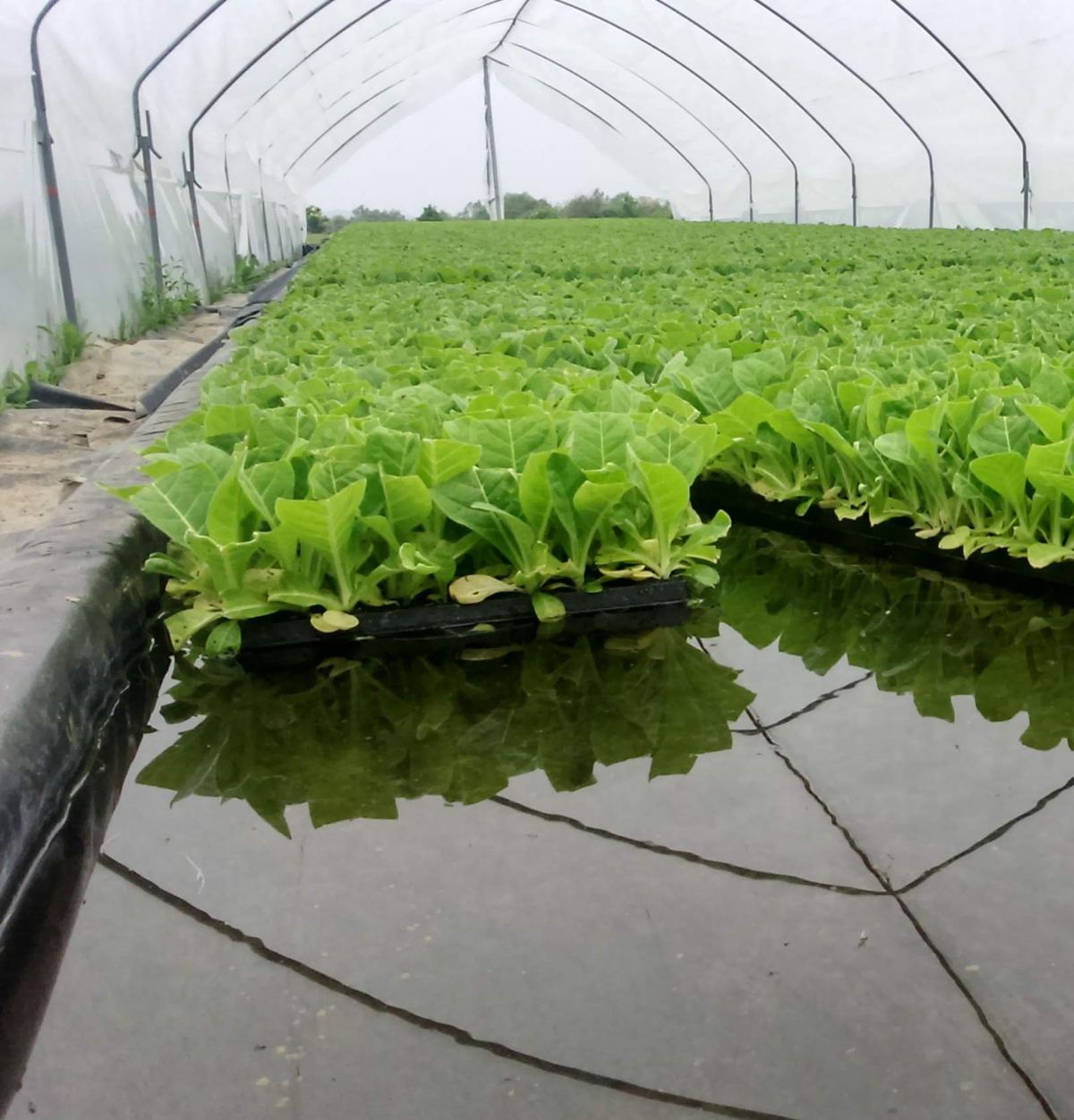
- The tray floats at the waterline.
- The seedling canopy is even across the tray.
- The float bed is a shallow bed of water under the trays.
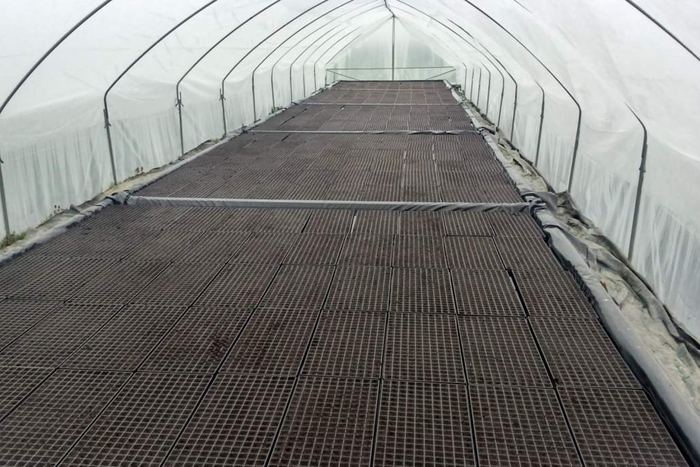
Day 7
Day 15
Day 35
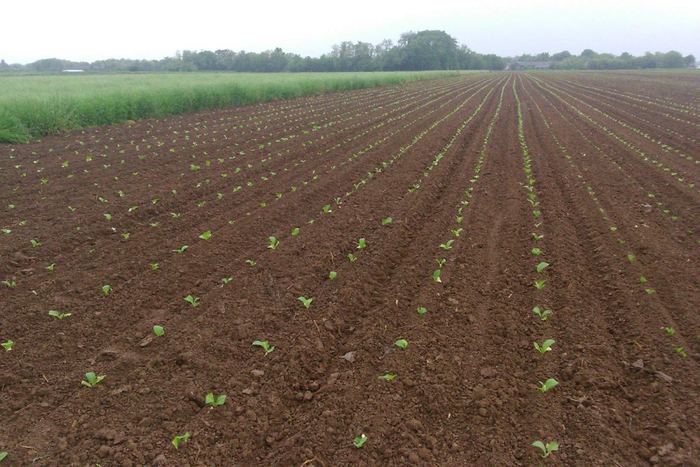
In the field
Proven in trials across Europe
The first floating trials were carried out by SEKE S.A. (Cooperative Union of the Tobacco Growers of Greece). They were successful, and SEKE adopted the system commercially in with the 210-cell tray (67×33 cm).
Tobacco Presentation, Ina Plastics
Tobacco companies in Poland, Italy, Spain, Hungary, Croatia, Bosnia and Serbia have since trialled the floating DTS. The trials showed that it floats perfectly, the roots are not damaged, extraction is very easy, and disinfection is quicker, simpler and more effective.
Transplanting in the field
- Adaptable to transplanting machines
- The plants do not fall off, even when the tray is held vertically
- No residues left in the seedling, high survival rate and higher yields
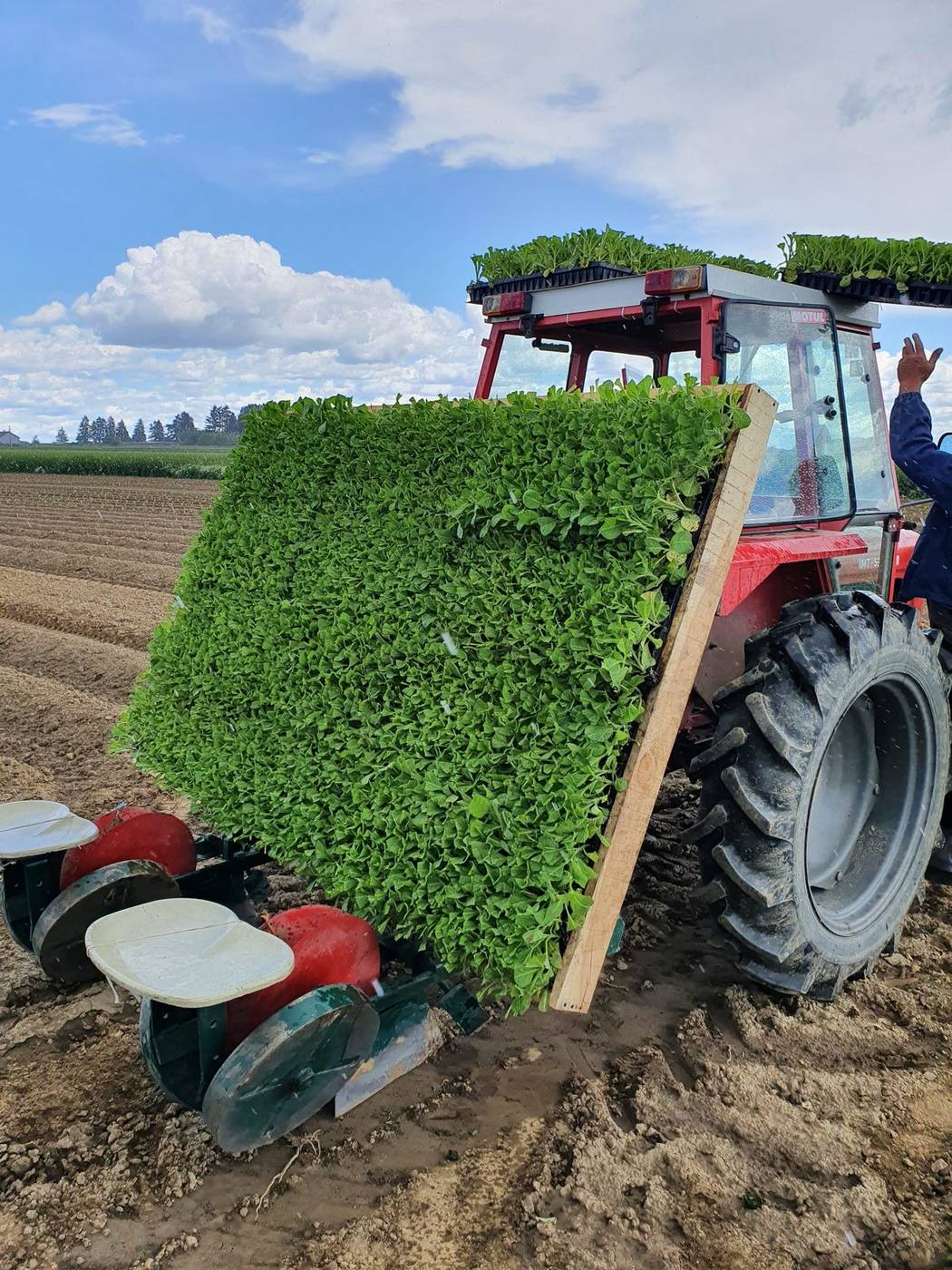
- The tray is held vertically and the plants stay in the cells.
- The transplanting units take the plants from the tray.
- Spare trays are carried on the tractor roof.
| Tray | Size (cm) | Cells | Cell dimension (mm) | Cell volume (ml) | Pcs./pallet |
|---|---|---|---|---|---|
| DTS 209 WR | 52×32 | 209 | 22.8×22.8×55 | 21.1 | 2000 |
| DTS 210 | 67×33 | 210 | 28×28×58 | 22 | 1665 |
| DTS 300 | 67×33 | 300 | 23×23×50 | 15 | 1665 |
| DTS 338 | 67×33 | 338 | 20×20×50 | 10.9 | 1665 |
| DTS 406 | 67×33 | 406 | 20×20×47 | 10 | 1665 |
Application 08 · Licensed cultivation
Cannabis and hemp transplants
The DTS is used for hemp propagation on rails or in float beds. Our DTS 72 tray was trialled on cannabis by a customer in Yuma, Arizona, and showed premature growth, a healthier root system and easy extraction from the sowing date.
- DTS 72 · 72 ml cells
- Trial: Yuma, Arizona
- Rails or float beds
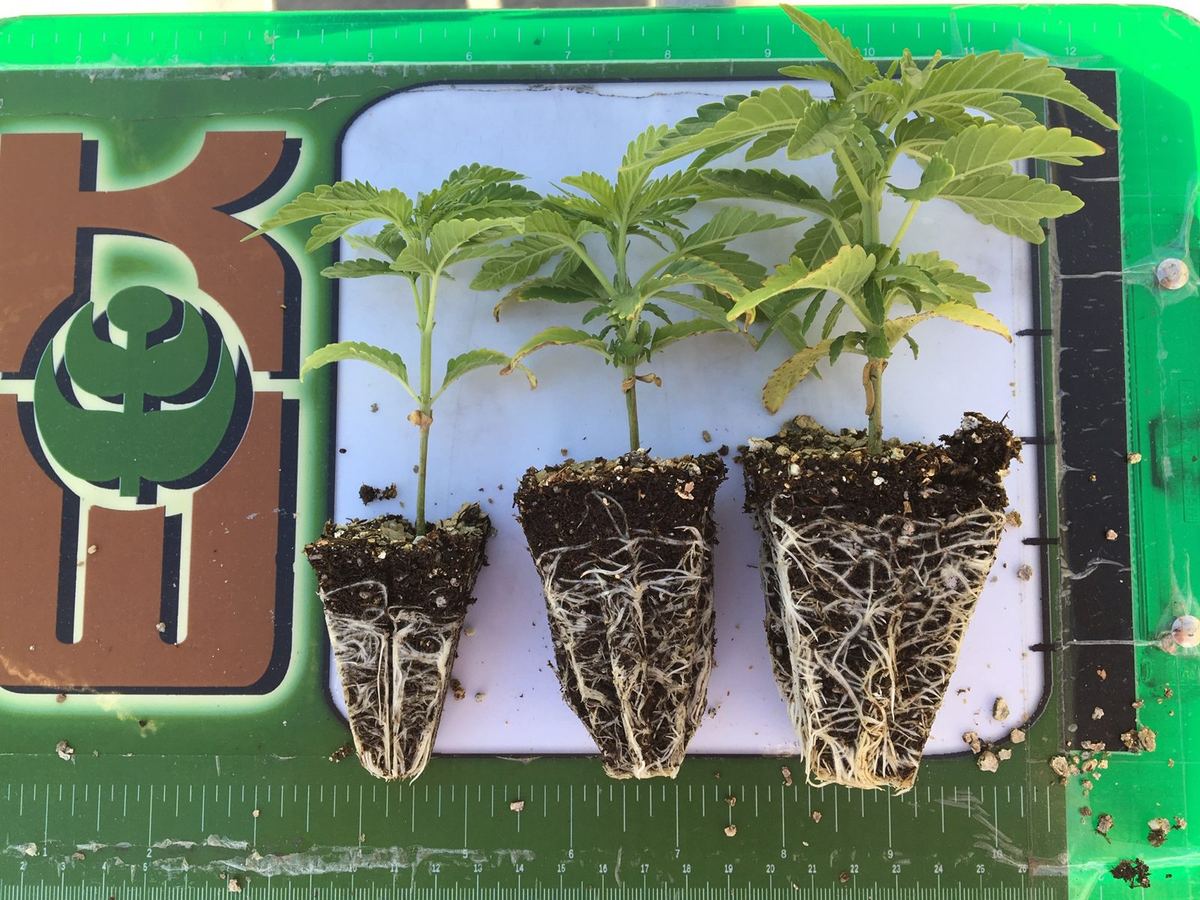
- Roots fill the plug from top to bottom.
- The plug stays whole when pulled.
- Healthy young plants, ready to transplant.
Seedlings or clones
Hemp and cannabis growers start from seed-grown plugs or from rooted cuttings (clones). Seedling plugs cost less and develop a strong taproot but vary more between plants. Clones are uniform but cost more. Both need a tray that gives a full, intact root plug for transplanting.
- Premature growth from the sowing date
- Healthier root system and high survival rate
- Easy extraction of the plants from the cells
- Recyclable trays, a 100% ecological solution
Practical tips
- Do not hold plants too long. Plan transplant production so plants go out with a strong root system, before they become root-bound.
- Check the rules. Grow and sell transplants only where cultivation is licensed or permitted. Some regions require certified seed or clones.
Tips are general practice from Purdue and University of Wisconsin hemp extension.
Application 09 · Herbs
Oregano seedlings
The DTS 336 helps young oregano plants grow evenly and compactly, with robust roots, for field transplanting from September to January in regions like Thessaly. The seedlings come out easily and cleanly, so transplanting is smoother and losses are fewer.
- DTS 336 · 11.6 ml
- DTS 336 RS · 13.9 ml
- 54×34 cm
- Transplanting Sep–Jan
Two trays, two sowing windows
At the Makris greenhouse in Thessaly, two 336-cell trays split the season:
- DTS 336 RS
- Larger cells (13.9 ml) for the early sowings. August heat raises the water need, and the bigger cell holds more.
- DTS 336
- Smaller cells (11.6 ml) for the September and October sowings. They save peat and substrate and keep production cost low.
- Healthy, compact and uniform young plants
- Fewer transplanting losses thanks to strong root development
- A smooth, reliable propagation process that enhances productivity
From “It’s oregano season”, Ina Plastics news, , and the Makris greenhouse visit.
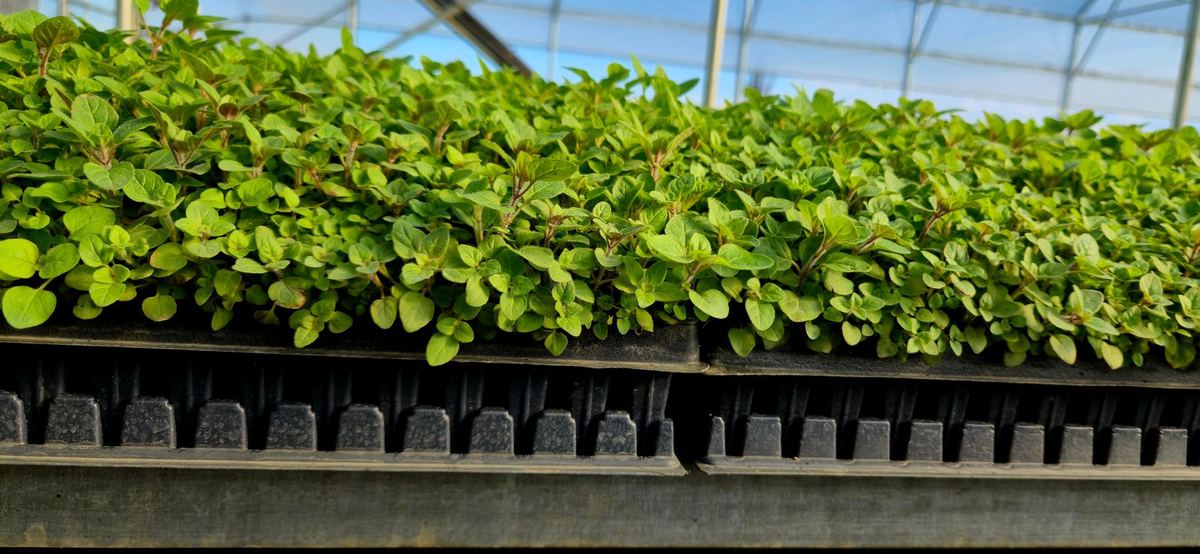
- The plants are compact and uniform across the tray.
- The cells of the top tray sit in the bottom tray.
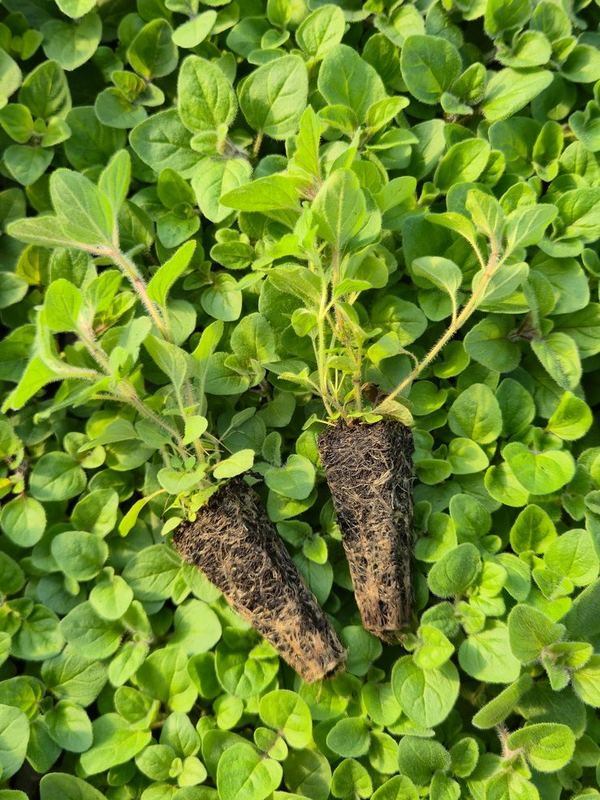
Root plugs
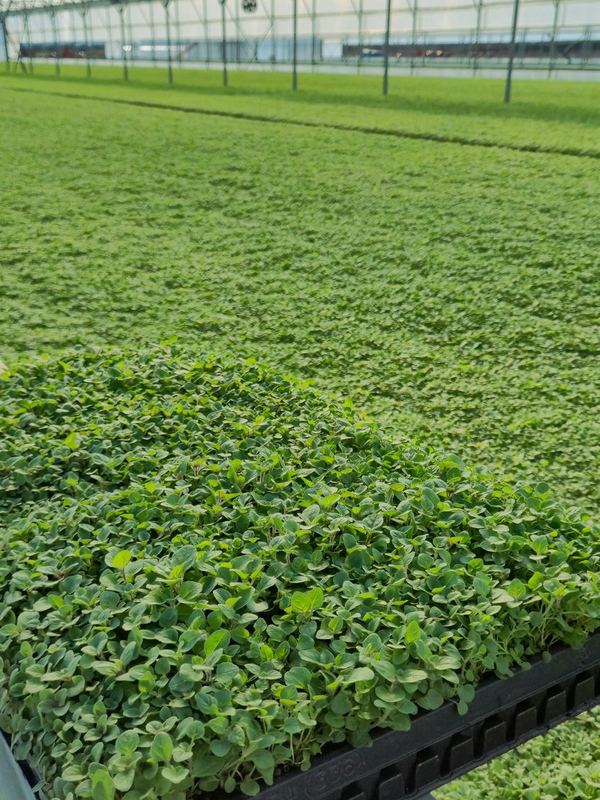
In the greenhouse
Ready for the field
| Tray | Cells | Cell dimension (mm) | Cell volume (ml) | Use |
|---|---|---|---|---|
| DTS 336 RS | 336 | 20.6×20.6×56 | 13.9 | Early, hot sowings |
| DTS 336 | 336 | 20.4×20.4×53 | 11.6 | September–October sowings |
Application 10 · Pot plants
Pots and carrying trays for flowers and herbs
Ina thermoformed pots are made of high-quality polypropylene in various colours and in sizes from 11 to 19 cm. They protect the roots 100% from the sun, which keeps the plant healthy. Carrying trays with added rubber are harder to crack and easier to carry.
- 11–19 cm diameter
- 0.56–3 l
- Polypropylene
- Carrying trays for 9–14 cm pots
Practical tips
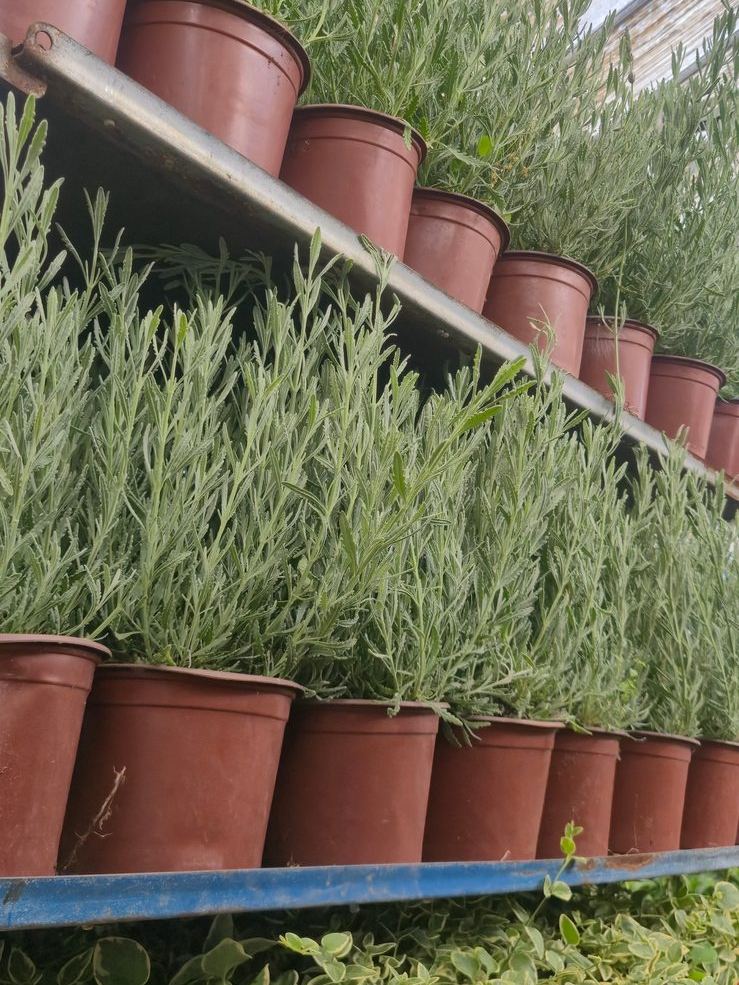
- Size the pot to the finished plant. 11 cm (0.56 l) for pot herbs and small flowering plants. 14 cm High or Low for the classic retail pot. 17–19 cm (2–3 l) for shrubs such as lavender.
- Match the carrying tray. Use the 15-seat tray for 10.5–11 cm pots and the Universal tray for 9–14 cm pots.
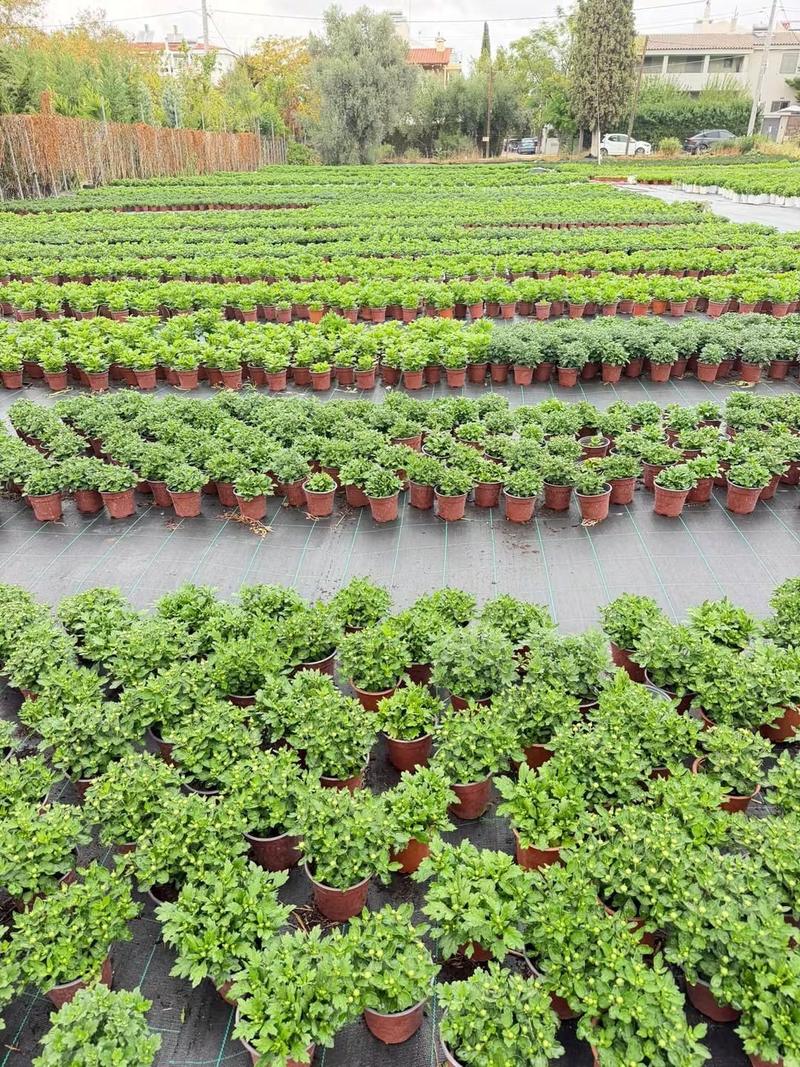
- Grow outdoors. The pot protects the roots 100% from the sun, so plants stand on open beds in full light.
| Pot | Diameter (cm) | Height (cm) | Volume (l) | Items/pallet |
|---|---|---|---|---|
| 11 | 11 | 9.6 | 0.56 | 30720 |
| 14 High | 14 | 12.5 | 1.3 | 13200 |
| 14 Low | 14 | 11 | 1.1 | 13824 |
| 2 l | 17 | 13.5 | 2 | 5125 |
| 2.5 l | 17 | 15.4 | 2.5 | 5330 |
| 3 l | 19 | 15.4 | 3 | 4125 |
Application 11 · Berry propagation
Berries: propagation trays and troughs
Ina 56×36 cm propagation trays are designed mainly for berries. They need no rails and fit standard plastic fruit crates. Ina cultivation troughs carry hydroponic berry crops.
- 56×36 cm · 24–150 cells
- 26–400 ml per cell
- No rails needed
From runner tip to plug plant
Strawberry plug plants are usually grown from runner tips (unrooted runners) taken from mother plants and rooted in cell trays. In a few weeks they become a plug with a full root system and leaves, ready to plant. Larger cells (Tray 24, 400 ml) suit bigger plants and longer cycles. Smaller cells (Tray 150, 26 ml) suit high-density young plants.
- Light, flexible and strong, used on benches, tables or directly on the ground
- Fits inside standard plastic fruit crates, for easy moving and transport
- The roots are not damaged when the plant is extracted
Practical tips
- Use clean mother plants. Do not take tips from old fruiting plantings, because viruses and anthracnose spread this way.
- Harvest tips with root initials. Tips that already show small root pegs root faster in the tray.
The runner-tip practice is general guidance (Purdue, Penn State extension).
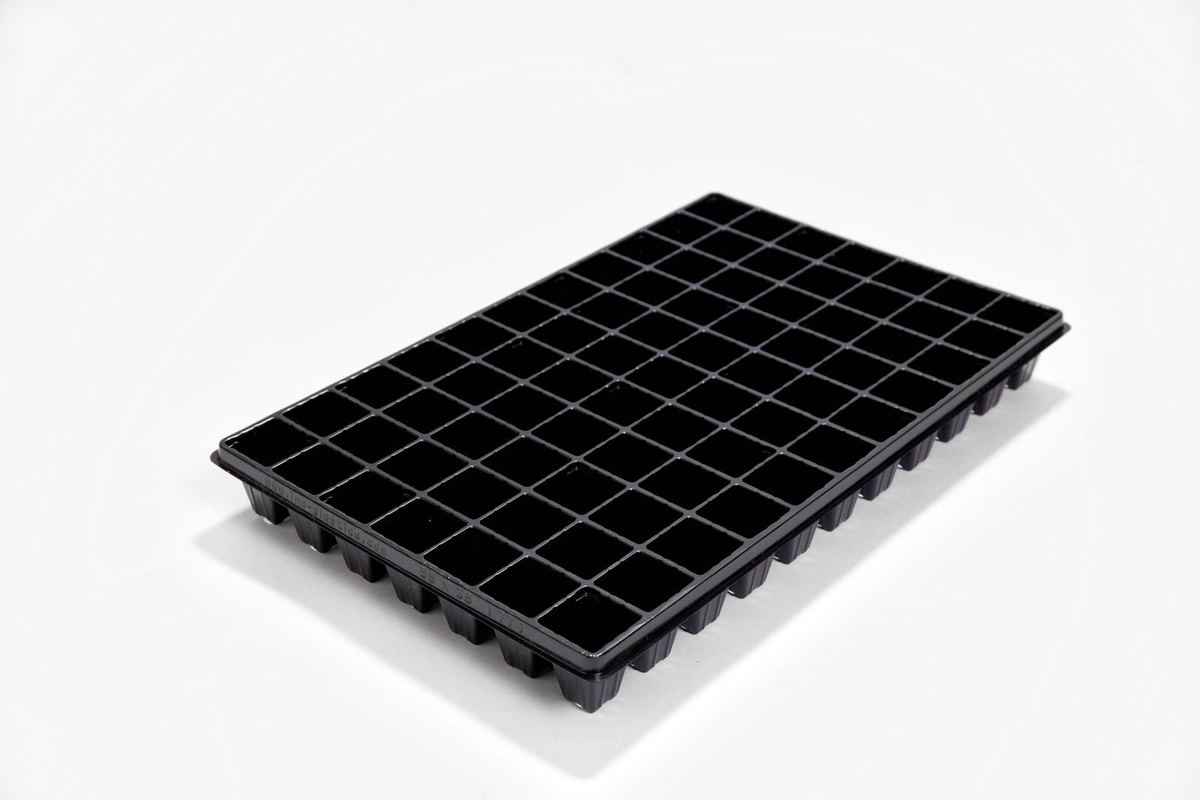
Tray 77, the 56×36 cm propagation tray with 77 cells.
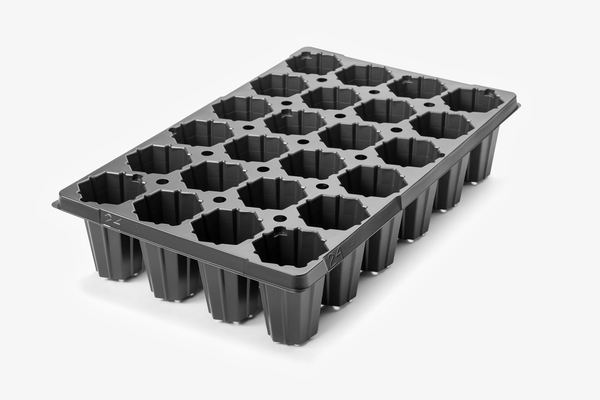
Tray 24
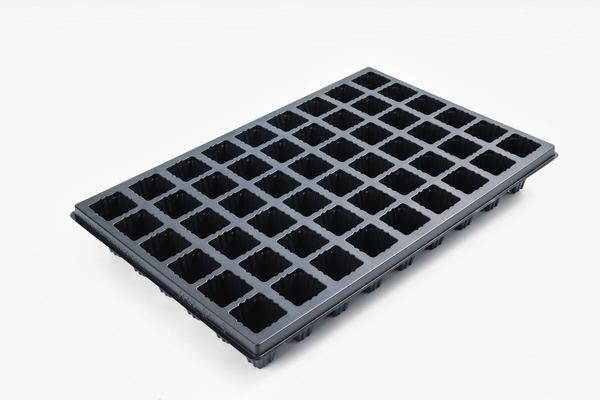
Tray 54
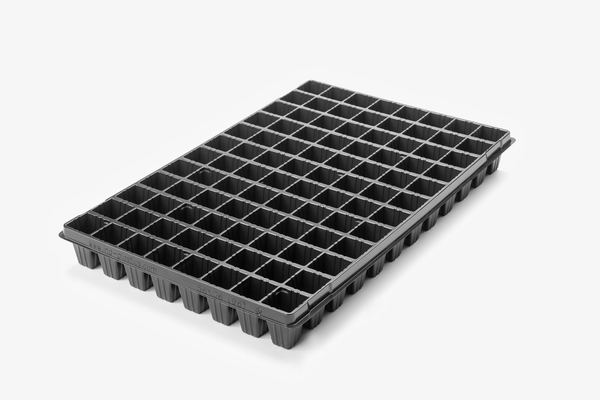
Tray 96
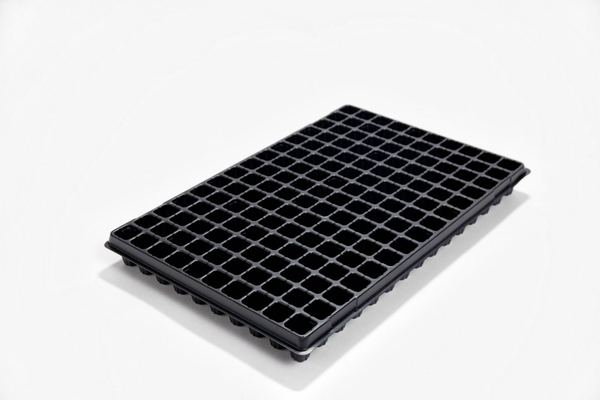
Tray 150
| Tray | Cells | Cell dimension (mm) | Cell volume (ml) |
|---|---|---|---|
| Tray 24 | 24 | 77×77×120.6 | 400 |
| Tray 54 | 54 | 46.3×46.3×68 | 83 |
| Tray 77 | 77 | 47×47×60 | 75 |
| Tray 96 | 96 | 40×40×60 | 60 |
| Tray 150 | 150 | 30.3×30.3×50 | 26 |
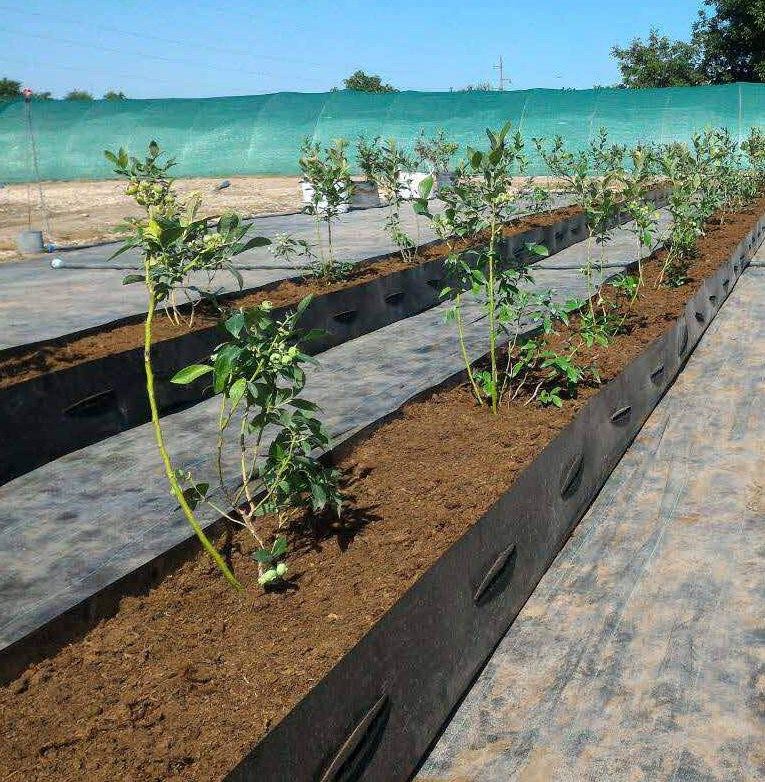
Hydroponic berries in Ina cultivation troughs, Serbia.
Hydroponic berry cultivation
In hydroponic berry crops, Ina cultivation troughs and drainage gutters carry the crop, as in this berry cultivation in Serbia. Troughs suit loose substrate, and they are made to order from recycled material.
Application 12 · More crops
Stevia, forestry and flowers
The DTS is used for all kinds of seedlings, including vegetables, forestry and flowers, on rails or water beds. It is also used extensively for stevia seedling propagation.
On rails in Europe and Mexico
- The root does not get stuck inside the cell, and the material does not shatter
- High reusability and cost-effective logistics: 90% less storage space than traditional trays
- Easy and cost-effective disinfection
- Made from recycled material and recyclable after use
Over 30 DTS models are available, from 28 to 406 cells, on footprints from 52×32 to 67×33 cm.
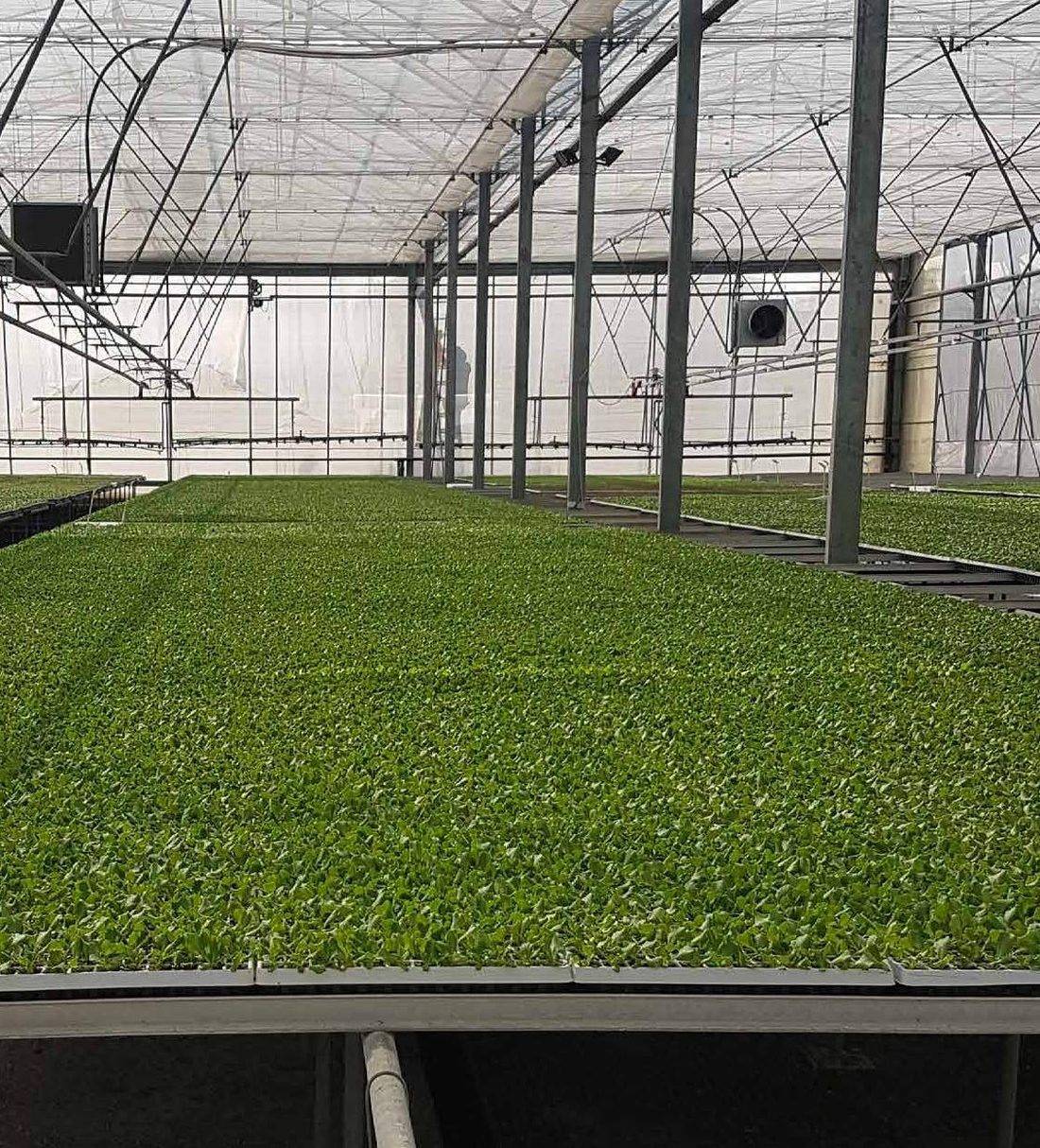
Seedlings in a propagation greenhouse.
Made from recycled plastic, recyclable again
Ina Plastics invested in plastics recycling from its start in and today produces exclusively from recycled materials, with strict process control on every incoming batch. The final products are 100% recyclable. We recommend handling practices to our customers and give them incentives to collect and recycle used trays, through designated recycling companies in the markets where we are active.
Frequently asked questions
Growing something else?
Tell us your crop, your growing system (rails, float beds or benches) and your target plant size. We will recommend the right tray or system.
Last updated .